Sungwon Kim
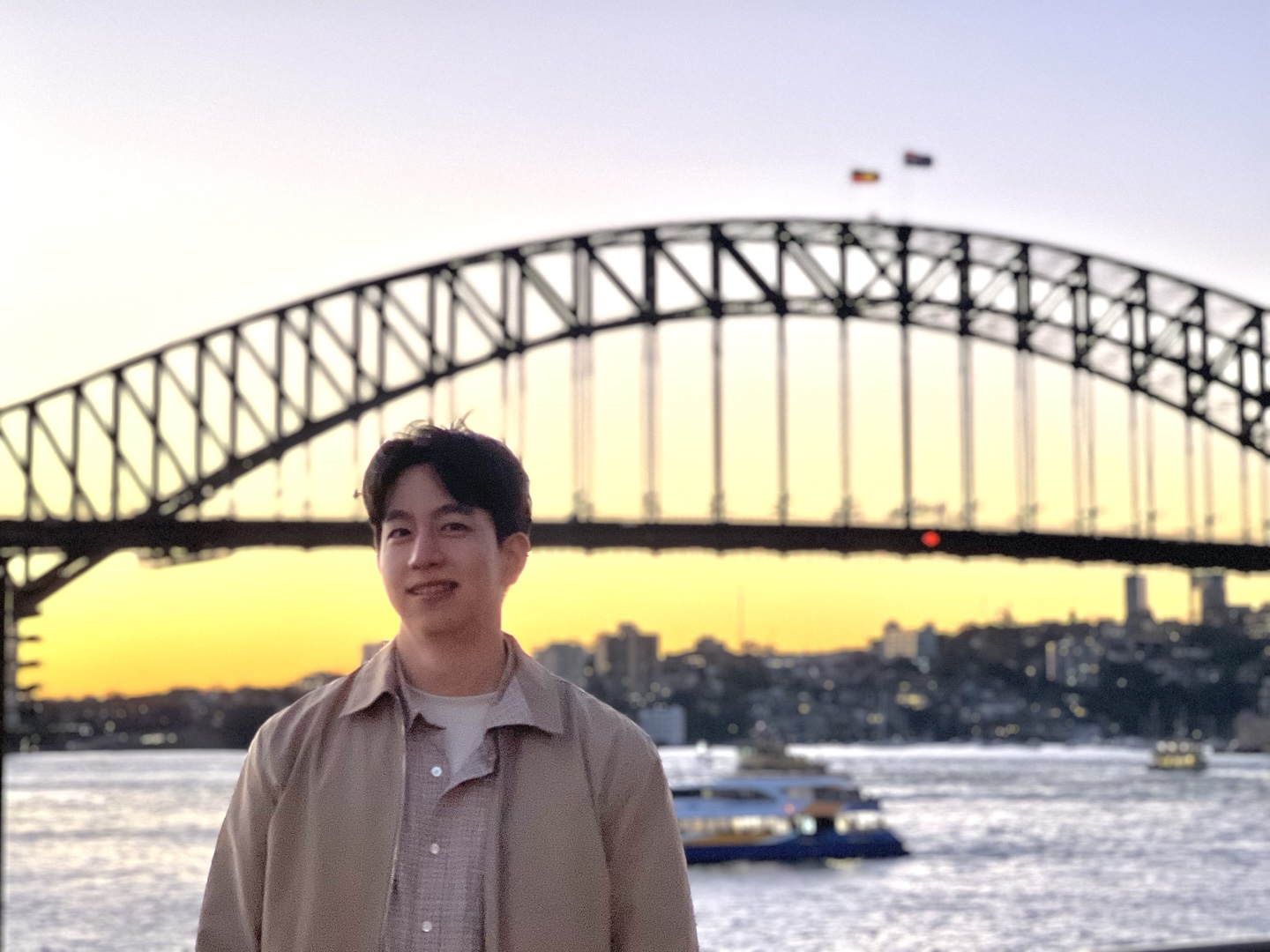
Ph.D. candidate at KAIST · Visiting Researcher at Caltech
I am Sungwon Kim (pronounced “Sung-won”), a Ph.D. candidate in the Graduate School of Data Science (GSDS) at KAIST, where I am advised by Prof. Chanyoung Park. I hold a B.S. degree in Civil, Environmental and Architectural Engineering from Korea University.
I am currently a Visiting Researcher at Caltech, hosted by Prof. Anima Anandkumar.
I am actively engaged in research with my colleagues at the Data Science and Artificial Intelligence Lab.
🔬 Core Research Focus
Generalizable Geometry Representation for AI4Engineering / SciML
I work on how geometry should be represented so that AI surrogates for 3D simulation generalize beyond the conditions they were trained on — unseen boundary conditions, unfamiliar shape families, and arbitrary orientations, without retraining.
Keywords: Physics AI (Engineering), Geometry Representation, 3D Simulation, Neural Operators
Key Focus:
- Geometry-Generalizability: Coordinate-free, frame-invariant representations that transfer across unseen geometries and boundary conditions.
- Scalability: Surrogates that scale to industrial-level 3D problems with high resolution and geometric complexity.
- Usability: Surrogates that fit into practical engineering workflows.
News
-
Oct 2026
I started as a Visiting Researcher at Caltech, hosted by Prof. Anima Anandkumar.
-
Sep 2026
Our team received an NVIDIA Academic Grant (35K H100 GPU-hours) for the project “Geometry-Transferable Neural Operators for 3D PDE Solving”, where I serve as the Lead Researcher [Program].
-
Aug 2026
I gave an Invited Talk at Synopsys, “Learning Physics, Not Coordinates: Equivariant Geometry-Informed Fourier Neural Operators for 3D PDEs” [Slides].
-
Aug 2026
A paper was accepted at the KDD 2026 Workshop on Reliable Scientific Foundation Models (RelSciFM), and received the Best Paper Award [Certificate].
-
May 2026
I was recognized as a Gold Reviewer at ICML 2026.
-
May 2026
A paper was accepted at ICML 2026.
-
Apr 2026
Our team received a Google Research Award for the project “Coordinate-Invariant Neural Operators for Geometry-Transferable 3D PDE Solving” (PI: Prof. Chanyoung Park).
-
Mar 2026
A paper was accepted at Water Research.
-
Mar 2026
A paper was accepted at the ICLR 2026 Workshop on AI and Partial Differential Equations (AI&PDE), and selected for an Oral Presentation.
-
Oct 2025
A paper was accepted at NeurIPS 2025.
-
May 2025
A paper was accepted at ICML 2025.
-
Jan 2025
A paper was accepted at ICLR 2025, and selected for an Oral Presentation.
-
Jul 2024
A paper was accepted at the KDD 2024 Workshop on Human-Interpretable AI, and received the Best Paper Award.
-
Jul 2024
A paper was accepted at the KDD 2024 Workshop on Federated Learning, and received the Best Paper Award.
-
May 2024
A paper was accepted at KDD 2024.
-
May 2024
A paper was accepted at ICML 2024.
-
Jan 2024
A paper was accepted at WWW 2024.
-
Sep 2023
Two papers were accepted at NeurIPS 2023.
-
Jun 2023
A paper was accepted at the ICML 2023 Workshop on Computational Biology.
-
May 2023
A paper was accepted at Bioinformatics.
-
May 2023
A paper was accepted at KDD 2023.
-
Apr 2023
A paper was accepted at ICML 2023.
-
Mar 2023
A paper was accepted at the ICLR 2023 Workshop on Machine Learning for Materials (ML4Materials).